
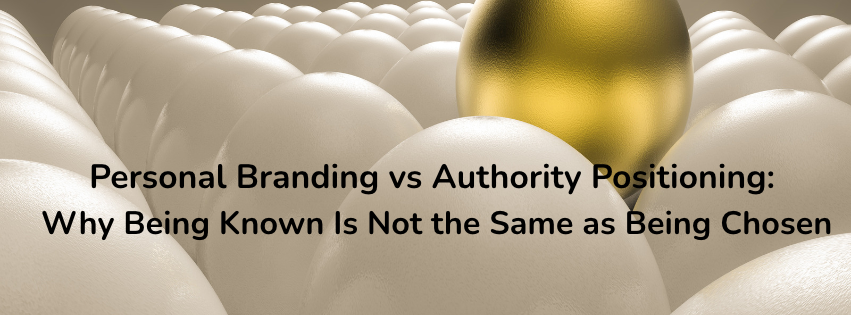
A founder can have a polished LinkedIn profile, a strong network and a steady stream of media coverage — and still be absent when the most consequential decisions are made. That is the distinction many accomplished professionals overlook: visibility does not automatically translate into authority.
As founders, CEOs and senior executives consider their next chapter, they often search for ways to improve their personal brand. But the deeper question may be different: Am I being perceived at the level at which I actually operate?
What Is the Difference Between Personal Branding and Authority Positioning?
Personal branding helps people recognise who you are, what you stand for and how you present yourself. Done well, it creates coherence and familiarity. It has value.
Authority positioning shapes how decision-makers interpret your expertise, judgment and strategic relevance. It influences the conversations you are invited into, the level at which you are considered and the reasons someone selects you over another credible option.
One supports recognition. The other determines what that recognition means.
Why Can an Impressive Personal Brand Still Fall Short?
Imagine a successful CEO who is widely known for building a company. Their reputation is strong — but entirely tied to execution. When investors seek an independent strategic adviser, they do not immediately think of that CEO. The experience is there. The association is not.
The same issue affects experts known for doing excellent work but not for their distinctive thinking. Being competent is not the same as being positioned as a trusted authority.
How Do You Build Authority Beyond Personal Branding?
First, define the decisions you want to influence, not just the audience you want to reach. Are you aiming for board appointments, strategic partnerships, high-value advisory opportunities or a stronger voice in your industry?
Next, articulate the point of view that makes your judgment distinctive. Your frameworks, ideas and intellectual property should make your expertise easier for others to understand, remember and recommend.
Then align the evidence: your biography, introductions, published insights, speaking and professional associations should all reinforce the same level of authority.
AI and search increasingly sit at the beginning of the discovery process. They may help people find you, but what those people find must make your strategic value unmistakable.
Personal branding can make you recognisable. Authority positioning helps ensure you are recognised for the right reasons, by the people whose decisions matter.
The objective is not to look more important. It is to make your actual VALUE impossible to misinterpret.
Donna Kennedy is an Authority Positioning Specialist who works with established founders, executives and experts on strategic authority positioning, professional reputation and influence beyond their existing roles.
Request a private confidential conversation here