
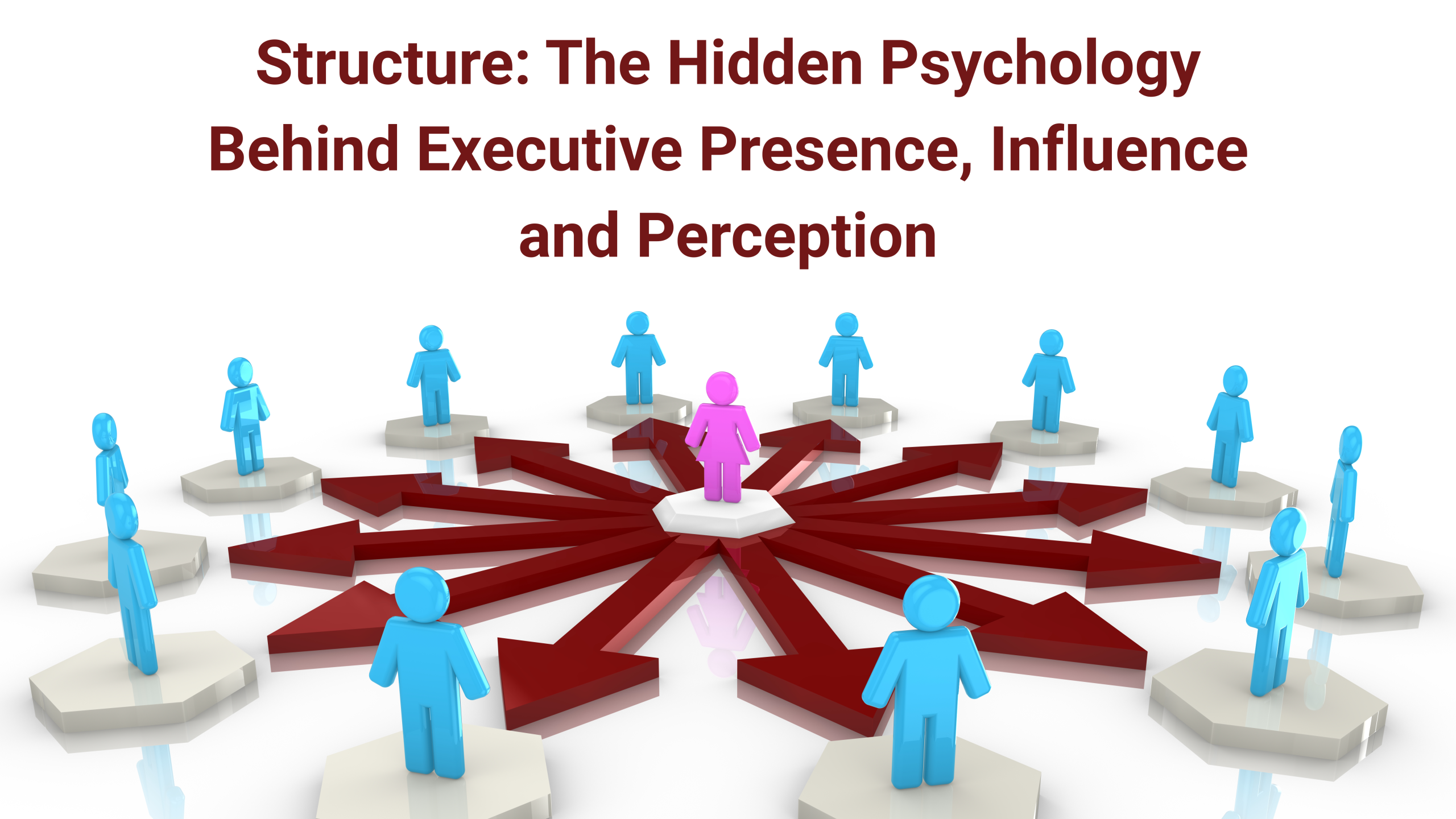
The structure surrounding executive presence, communication, positioning, visibility, and access shapes how influence is perceived at senior levels.
There is a moment that happens in senior environments long before somebody speaks, where the room has already decided how much weight they carry.
The pace of their arrival. The way they are introduced. How others defer. How access around them is managed. How selectively they engage. Whether their attention feels scattered or expensive.
Most people think authority is earned through competence. That is only partially true.
Competence gets you into the conversation. Structure determines how seriously you are taken once you arrive.
The difference is perception architecture.
Perception architecture directly affects executive presence, authority positioning, leadership influence, and commercial opportunity.
One is operating through output. The other is operating through positioning.
Positioning is always structural.
You can see this everywhere once you notice it.
The founder who replies to every message instantly eventually becomes psychologically interpreted as operational.
The executive who constantly over-explains unintentionally weakens the authority of their own thinking.
The expert who is visible everywhere loses distinction.
The consultant who gives away strategic insight too freely slowly removes the perceived value from it.
None of these people lack capability. Most are exceptionally good. But authority is reinforced through the conditions surrounding capability.
At senior levels, perception behaves differently. People are not assessing every detail rationally. They are absorbing patterns: Does this person appear contained? Do they appear selective? Do they create movement when they speak? Does access to them feel casual or considered?
Human beings instinctively associate structure with importance.
This is central to authority psychology. People instinctively trust individuals who appear deliberate, measured, selective, and strategically positioned.
This is why institutions protect access. Why luxury brands control exposure. Why high-level advisors rarely over-participate. Why genuinely influential people tend to communicate with precision rather than volume.
Structure creates psychological weight.
Without structure, even brilliant people become overly familiar. Familiarity changes interpretation.
The market begins seeing them as available rather than valuable. Responsive rather than strategic. Present rather than significant.
Most professionals never realise this is happening because they believe hard work naturally translates into authority.
Often it translates into dependency instead.
They become indispensable operationally while remaining invisible strategically.
This is one of the great professional traps, especially for high performers, founders, consultants, advisors, executives, and subject matter experts whose professional identity has been built around delivery and responsiveness.
High performers are usually rewarded early in their careers for responsiveness, accessibility, speed, and execution.
Then one day they arrive in rooms where those same behaviours stop increasing perceived value.
In some cases, they start reducing it.
Senior authority relies on different signals.
Calmness under pressure. Clarity without excess explanation. Selective contribution. Structured visibility. The ability to create direction rather than simply respond to it.
People who carry authority rarely appear emotionally crowded.
There is space around how they operate.
Space creates gravity, and gravity changes how people listen.
This is why some individuals can say very little and still alter the direction of an entire discussion.
The room has already assigned weight to them before the sentence arrived.
Years of structural positioning created that effect.
Most people attempt to strengthen authority by adding more, but authority is often strengthened through reduction.
Reducing noise. Reducing unnecessary accessibility. Reducing over-explanation. Reducing reactive behaviour. Reducing exposure that weakens distinction.
Until what remains feels deliberate.
Deliberate people are interpreted differently.
That is the part many professionals miss.
For professionals operating at senior levels, authority is not only built through what you do.
It is reinforced through what your structure allows other people to believe about you.
Donna Kennedy
Authority Positioning Specialist
– Positioning leaders, entrepreneurs, and experts to build authority and executive presence through behavioural intelligence, strategic communication and intellectual assets.
[ Request a private conversation ]
Related Insights
The Authority Assignment – Brief
Download The Authority Assignment – Brief This complimentary brief provides a concise overview of the core dynamics behind authority assignment, positional perception, and structural recognition explored more deeply in the forthcoming book The Authority Assignment: Where Comparison Stops and Opportunity Begins.